
Article Summary: A roller table is an industrial conveying system that moves, supports, and positions materials between production stages. It is particularly useful in steel rolling mills, where billets, blooms, slabs, and finished steel products need to be transported reliably between furnaces, rolling stands, cooling beds, and finishing equipment. According to the Steel Authority of India Limited (SAIL) and the 'Introduction to Materials Handling' textbook, roller tables facilitate continuous material flow via powered or gravity-driven rollers. The appropriate design depends on factors such as load, temperature, transport speed, and process requirements.
What Does a Roller Table Do?
A ローラー台 uses a series of rotating rollers mounted on a supporting frame to move materials along a defined production route. In a steel plant, it connects equipment that would otherwise operate separately, enabling hot or cold metal products to travel from one process to the next with less manual handling and more consistent timing. Depending on the layout, a roller table may feed billets into a rolling stand, collect material after a rolling pass, transfer products to a cooling bed, or deliver finished steel to cutting, inspection, and collection areas.
The term 'roller table' is particularly common in the metallurgical industry, although similar equipment is also used in manufacturing, assembly, warehousing and material handling systems. The function of a roller table goes beyond simply moving an object; the spacing, speed, drive arrangement, surface condition and alignment of the rollers all influence whether the product reaches the next station safely and on time. In a rolling mill, where hot steel is often long, heavy, and moving rapidly, a well-designed roller table helps to maintain production continuity and reduce the risk of delays caused by unstable material transfer.
A roller table is not the same as the rolls inside a rolling stand. The rolling stand applies pressure to change the cross-section or thickness of the steel, whereas the roller table transports and positions the workpiece before, between, or after those deformation stages. It is important to understand this distinction when specifying equipment: the table must carry and guide the material under the expected operating conditions, but it does not perform the primary metal-forming operation.
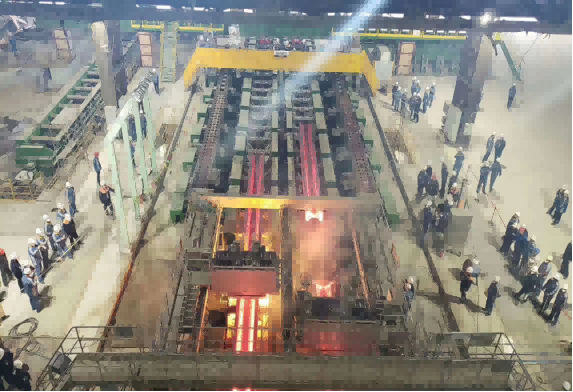
How Does a Roller Table Work?
A typical roller table consists of cylindrical rollers that are arranged at regular intervals along a frame. Each roller rotates on bearings or bearing housings, and shafts, couplings, gearboxes, chains, belts, or other drive components provide motion when powered transport is required. The frame supports the rollers and maintains their relative position. Control equipment can regulate the speed, direction, and start/stop sequences to coordinate movement with other machines upstream or downstream.
The operating principle depends on the drive method. A powered roller table uses motors to rotate the rollers and move the material forward or backward. This makes it suitable for controlled transport and, in some rolling mill applications, for reversible movement. In contrast, a gravity roller table uses free-turning rollers and a suitable incline to allow material to move under gravity or manual force. This method is generally more appropriate for compatible loads and lower-control applications than for heavy, hot steel requiring precise positioning.
In a steel rolling line, the sequence can be understood as a coordinated material-handling cycle:
- Receiving: The table receives a billet, bloom, slab, plate, or bar from a furnace, machine, or preceding conveyor.
- Transporting: Rotating rollers move the workpiece toward the next processing station while supporting its weight.
- Positioning: The drive and control system stop, reverse, or adjust movement so the workpiece aligns with the next machine.
- Transferring: The material enters a rolling stand, shear, cooling bed, inspection station, or collection area, after which the table is ready for the next cycle.
Not every roller table performs all four functions in the same way. Some are designed for continuous unidirectional conveying, while others must accelerate, decelerate, reverse, or work with manipulators and lifting equipment. The more demanding the process, the more important it becomes to coordinate roller speed and positioning with the surrounding machinery.
What Are the Main Types of Roller Tables?
Roller tables can be classified by their function, drive configuration, and operating environment. These categories overlap: a table used to feed a rolling stand, for example, may also be powered, reversible, and designed for high-temperature service. Understanding the distinctions helps engineers specify equipment that fits the production process rather than selecting a generic conveyor based on appearance alone.
- Working roller tables
Working roller tables are installed close to rolling stands and transport the workpiece during rolling operations. In a reversing mill, the table may receive the steel after one pass and return it toward the rolls for the next pass; front and rear tables can alternate between feeding and receiving roles. The drive, roller arrangement, and control system must therefore accommodate the workpiece's weight, speed, temperature, and required direction changes.
- Transport roller tables
Transport roller tables connect different parts of the production line, moving material from storage or furnace discharge toward rolling equipment, or from a processing station to a downstream operation. Their primary purpose is reliable transfer rather than direct coordination with the deformation process itself. Depending on the installation, they may operate continuously, in batches, or only when a downstream machine is ready to receive material.
- Charging and discharging roller tables
Charging tables feed raw or semi-finished material into a process, while discharging tables receive material after it leaves a furnace or machine. These tables may experience impact loads as hot billets or other heavy products are transferred onto them. Their design should account for the transfer method, workpiece dimensions, expected temperature, and the possibility of uneven loading during entry or exit.
- Cooling-bed and finishing-line roller tables
After rolling, steel products often need to move toward cooling beds, shears, straightening equipment, inspection stations, or bundling areas. Roller tables in these sections must provide dependable transport while accommodating changes in product temperature, shape, length, and production speed. The required accuracy can be especially important where the material must be cut to length or aligned for inspection and finishing.
- Gravity and powered roller tables
Gravity tables have no powered roller drive and rely on a slope or an external push to move loads. They are mechanically simple and may be suitable for warehouses, assembly operations, and selected light-duty transfer tasks, but they offer limited control over acceleration and stopping. Powered tables use motors and transmission components to provide more controlled movement; heavy industrial systems may use centralized drives or individually driven rollers according to the load, layout, and maintenance strategy.
| Roller table type | Main purpose | Typical operating characteristics | Common applications |
| Working roller table | Feed and receive material at rolling stands | May need reversible movement and coordinated speed control | Reversing mills and rolling stands |
| Transport roller table | Move material between process stations | Continuous or intermittent conveying | Furnace-to-mill transfer and production-line links |
| Charging/discharging table | Load or receive material at equipment interfaces | May experience impact and high-temperature exposure | Furnace entry and exit sections |
| Cooling-bed roller table | Transfer rolled products toward or away from cooling beds | Must handle changing product temperature and production timing | Bar, rod, and section rolling lines |
| Gravity roller table | Move compatible loads without a powered drive | Depends on slope, load geometry, and friction | Warehousing and selected assembly operations |
| Individually driven roller table | Control roller movement by separate drives | Supports flexible control and localized maintenance | Lines requiring specific speed or process coordination |
Where Are Roller Tables Used?
The steel industry is one of the most important sectors because metal products must pass through multiple stages without interrupting the production process. Roller tables transport billets and blooms from reheating furnaces to roughing stands, carry slabs or plates through the rolling and finishing sections, and transfer bars or sections towards the cooling, cutting, inspection, and collection stages. The design of the system changes according to the product: short billets and long hot bars create different support, alignment, and control requirements.
Roller tables are also used in metal processing facilities that handle plates, profiles, pipes, and fabricated components. In these environments, they can connect cutting machines, inspection stations, processing equipment and packing areas. Warehouses and distribution centres use related roller-table conveyors to move cartons, totes, pallets and other compatible unit loads. However, these systems generally have different load capacities, roller designs and operating requirements than heavy-duty metallurgical equipment.
The same basic principle supports automated production lines in manufacturing. A roller table can create a transfer point between machines, help organise work in progress and reduce the need for repeated forklift or manual movement over short distances. When integrated with sensors, drives and a programmable control system, it can also contribute to production sequencing — for example, by only moving a workpiece when the receiving station is clear. While automation does not remove the need for sound mechanical design, it makes correct alignment, dependable drives, and predictable stopping behaviour even more important.
What Determines Roller Table Performance?
A roller table's reliability depends on more than motor power. Its rollers, bearings, shafts, frame, drive transmission, surface condition, and controls must work as a system. If one component is poorly matched to the duty cycle, the consequences may include uneven movement, excessive wear, misalignment, unplanned stoppages, or damage to the transported material.
- Load capacity and roller spacing
The table must be able to support the weight and geometry of the workpiece across the intended roller arrangement. A long product may come into contact with several rollers at once, whereas a short or irregularly shaped workpiece may concentrate its load on fewer rollers. Engineers should evaluate the worst possible loading conditions, including impact during transfer and any uneven distribution caused by the shape of the workpiece or its support points.
Roller spacing should be determined based on the smallest workpiece dimension, its stiffness, and the acceptable degree of sagging or instability between rollers. Spacing that is suitable for a long steel slab may not be appropriate for a short billet or narrow component. The frame and foundation must also be able to withstand the resulting forces without deflecting excessively, as structural movement can affect roller alignment and material tracking.
- Roller material and surface design
The selection of materials depends on factors such as load, temperature, wear, corrosion exposure, and the degree of contact with the workpiece. In hot rolling applications, for example, roller assemblies may require specialised materials, cooling arrangements or surface treatments that are suited to the thermal and mechanical demands. For conveying at lower temperatures, priorities may include corrosion resistance, surface protection, noise control or compatibility with the transported product.
The roller surface should be appropriate for the material being handled. Excessive wear or damage can affect contact and transport stability, while unsuitable surface characteristics may mark the product or cause it to slip. Therefore, specifications should identify the operating environment and material-contact requirements instead of relying on a generic statement such as 'heavy-duty roller'.
- Drive, speed, and control
The drive system should provide sufficient torque to move the maximum expected load, including the effects of acceleration and operating resistance. Speed must be coordinated with upstream and downstream equipment; if a table moves too quickly, the workpiece may arrive before the receiving station is ready, while excessive delay can reduce line throughput. Reversing applications also require control of direction changes and stopping behavior.
A well-integrated control system may use sensors, interlocks, variable-frequency drives, or other automation components to manage movement. The appropriate level of control depends on process complexity and risk. In a steel mill, the control strategy should also consider high temperatures, scale, dust, vibration, and the need for safe access during maintenance.
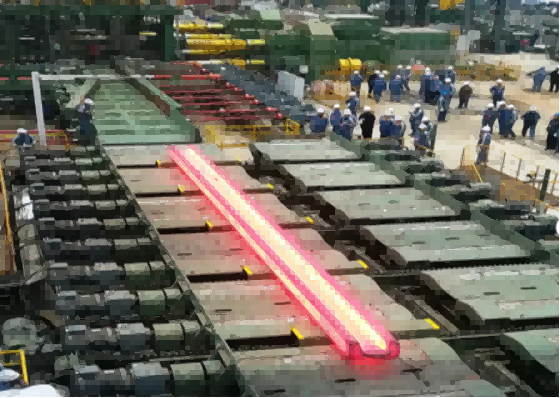
How to Select a Roller Table for a Steel Mill?
When selecting a roller table, it is best to start with the production process rather than the equipment catalogue. Before requesting a quotation, you should define the material type, the maximum and minimum dimensions of the workpiece, its unit weight, the operating temperature, the required transport speed, the conveying distance, and whether the table must reverse or stop at precise positions. You should also document the plant layout and the interfaces with furnaces, rolling stands, shears, cooling beds, and other machinery, so that the table can be designed around real operating conditions.
A practical specification should cover the following factors:
- Operating duty: Identify whether the table will run continuously, intermittently, or in frequent reversing cycles, and estimate the expected operating hours and starts per hour.
- Mechanical design: Define roller diameter and spacing, shaft and bearing arrangements, frame stiffness, drive configuration, and any special transfer or lifting mechanisms.
- Environmental conditions: State the expected temperature, scale and dust exposure, water or cooling requirements, and corrosion risks.
- Control and integration: Clarify speed regulation, direction changes, positioning accuracy, sensor interfaces, and required connections to the plant's control system.
- Maintenance and lifecycle: Evaluate access to bearings and drives, availability of replacement parts, lubrication requirements, and the ease of replacing individual components.
When sourcing rollers for steelmaking and rolling applications, we at Baosteel Roll recognize that dependable performance begins with matching the roller design and material to the actual service conditions. Buyers should provide operating parameters and interface drawings early in the procurement process, then compare suppliers on technical suitability, manufacturing consistency, inspection documentation, maintenance requirements, and total lifecycle cost—not just the initial purchase price.
Common Roller Table Problems and Maintenance Practices
Roller tables are used in environments where mechanical wear, heat, contamination, and repeated loading can gradually reduce performance. Common warning signs include unusual noises or vibrations, uneven roller rotation, an excessive bearing temperature, an inconsistent conveying speed, and workpieces that drift or fail to reach the intended position. In steel mills, accumulated scale and debris may also interfere with movement or accelerate wear if not managed appropriately.
Preventative maintenance should follow the manufacturer's instructions and the plant's risk-based maintenance schedule. Typical maintenance tasks include checking roller alignment, inspecting bearings and couplings, verifying the condition of the drive and gearbox, monitoring lubrication, tightening relevant fasteners, and inspecting the frame for damage or deformation. In critical applications, monitoring motor current, vibration, bearing temperature, or operating hours can help maintenance teams identify developing faults before they cause an unplanned shutdown.
Maintenance personnel should never rely on visual checks alone when a component is exhibiting abnormal behaviour. For example, a roller that appears intact may still have bearing damage, shaft wear, or a drive problem. Inspection and repair work must adhere to the plant's lockout, isolation, and safe access procedures, especially in areas where hot material, stored mechanical energy, or automated movement pose additional hazards.
Roller Table FAQs
- What is a roller table used for?
A roller table transports and supports materials as they move between industrial process stages. In steel mills, it commonly handles billets, slabs, bars, and other rolled products between furnaces, rolling stands, cooling beds, and finishing equipment.
- How does a roller table work?
A roller table moves material by rotating a series of rollers mounted on a supporting frame. The rollers may be powered by motors or rotate freely when movement is provided by gravity or an external push.
- What is the difference between a roller table and a conveyor?
A roller table is a type of conveying equipment that uses rollers to support and move compatible loads. The broader term conveyor also includes belt, chain, screw, and other systems that transport materials using different mechanisms.
- What types of roller tables are used in steel mills?
Common types include working roller tables, transport roller tables, charging and discharging tables, and tables serving cooling-bed or finishing sections. They may also be classified by drive configuration, such as centralized-drive, individually driven, or non-powered systems.
- What materials can a roller table handle?
Depending on its design, a roller table can transport steel billets, blooms, slabs, plates, bars, profiles, and other compatible industrial products. Load capacity, roller spacing, surface design, temperature resistance, and workpiece geometry determine whether a specific table is suitable.
- How do you maintain a roller table?
Routine maintenance includes inspecting rollers, bearings, shafts, drives, lubrication, alignment, and the supporting frame. Abnormal noise, vibration, temperature, or conveying behavior should be investigated promptly under the site's established safety procedures.
Conclusion
A roller table is a vital material-handling system that links production stages together, supports workpieces, and maintains the flow of industrial processes in a controlled sequence. In steel rolling mills, the design of the roller table directly affects the transfer and positioning of materials, operational reliability, and the continuity of downstream production.
The most suitable roller table is not necessarily the one with the highest speed rating or the heaviest construction; rather, it is the one that has been correctly engineered for the specific material, operating environment, load, duty cycle, and surrounding equipment. Clear technical specifications, suitable selection of rollers and drives, effective controls, and preventive maintenance help manufacturers to achieve reliable conveying performance and reduce avoidable downtime.