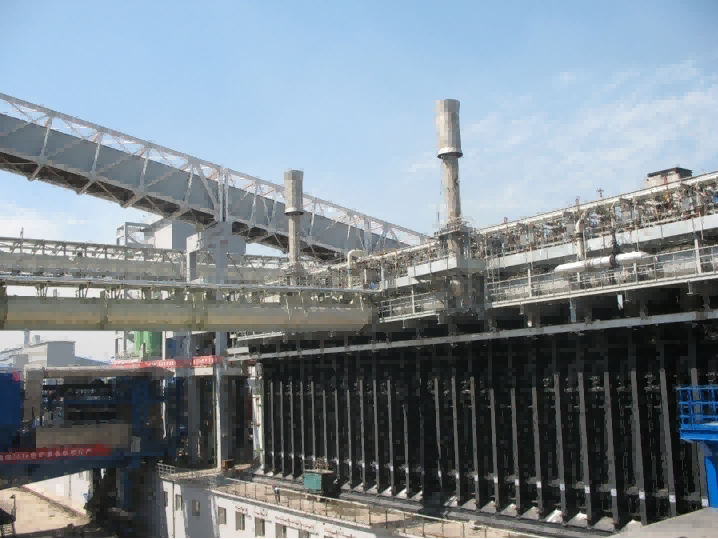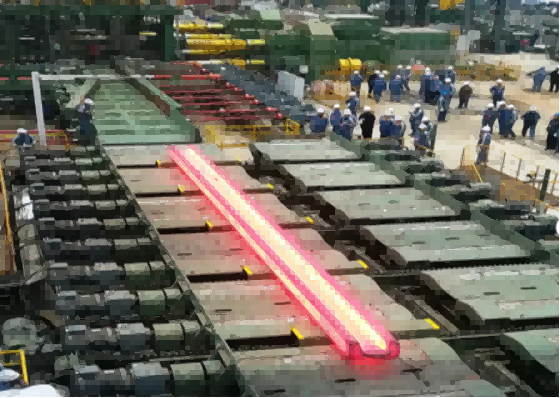
Article Summary: Mill stands are the structural and mechanical units in a rolling mill that support the rolls, withstand rolling forces, and help to control the thickness, cross-sectional shape, and dimensional accuracy of metal products. Technical research published in Metals suggests that mill stand clearances and the configuration of work rolls, backup rolls, bearings, and housings can influence strip movement and rolling stability. Meanwhile, the Association for Iron & Steel Technology (AIST) highlights the impact of stand stiffness and design on the performance of long-product rolling lines. This article explains the main functions, types, components, applications, and selection criteria of mill stands in modern steel and metal processing.
What Is a Mill Stand?
A mill stand is a mechanical assembly that holds and positions the rolls used to deform metal during the rolling process. It is a vital component of a rolling mill, through which metal stock passes between rotating rolls to reduce its thickness, alter its cross-section, or achieve a specified diameter or profile. Depending on the production line, mill stands can process a variety of metal products, including slabs, billets, blooms, steel strips, bars, wire rods, beams and channels.
A mill stand is more than just a frame surrounding a pair of rolls. It must support the roll assemblies, maintain their relative positions under heavy loads, accommodate adjustment mechanisms and transfer rolling forces into the mill structure. A typical conventional stand may include a housing, roll chocks, bearings, work rolls and backup rolls where required, as well as a screw-down or hydraulic adjustment system. Housingless designs use a different structural arrangement, but still need to provide the rigidity and alignment required for stable rolling.
The exact design depends on the metal being processed, the required product dimensions, the rolling temperature, and the position of the stand within the production line. Roughing stands are generally designed to withstand substantial deformation loads, while intermediate and finishing stands increasingly focus on controlling the final section and meeting dimensional tolerances.
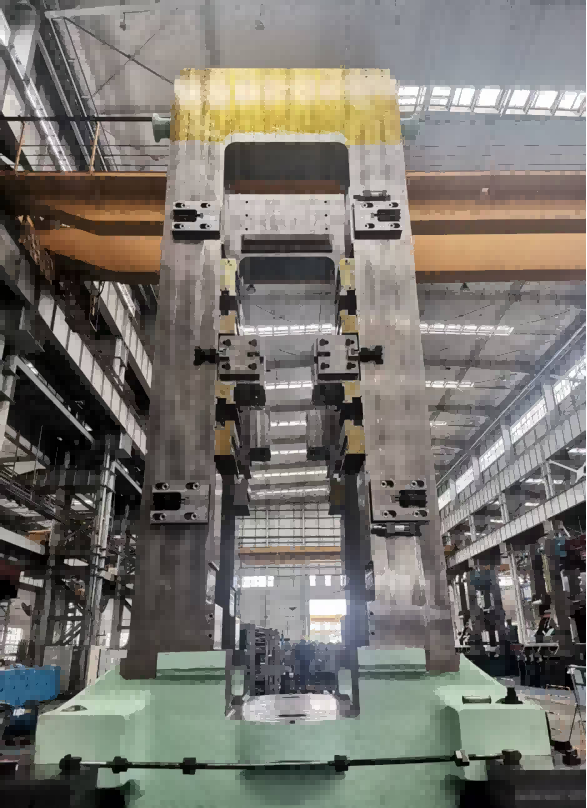
What Are Mill Stands Used For?
Mill stands perform several connected functions. Their importance is not limited to holding rolls in place: they help determine how consistently a rolling mill converts incoming stock into finished metal products.
- Reducing Metal Thickness and Cross-Section
The primary function of a mill stand is to support the rolls that exert compressive force on the workpiece. As the metal passes through the roll gap, its thickness or cross-section changes. In flat rolling, this may involve reducing a steel slab or strip to a thinner gauge, whereas in long-product rolling it may entail transforming a billet into a round bar, wire rod, angle, channel or beam section.
Most production lines use a series of rolling passes rather than attempting to achieve the full reduction in a single pass. Each stand performs a defined portion of the deformation, enabling more effective control of material flow, rolling load, and final geometry.
- Maintaining Dimensional Accuracy
Mill stands help to maintain the roll gap and alignment necessary for producing consistent dimensions. However, if the stand deflects excessively under rolling force or if there is too much clearance in the bearings, chocks, or adjustment mechanisms, the actual roll gap may differ from the intended setting. This can result in variations in strip thickness, bar diameter, section dimensions or product shape.
Stand rigidity is therefore a major design consideration. A study published in Metals examines the effect of clearances in finishing mill stands on strip-end motion, demonstrating that a stand's mechanical condition and clearances can influence rolling behaviour.
For manufacturers, achieving dimensional control depends not only on the nominal roll setting, but also on structural stiffness, thermal conditions, roll wear, bearing condition, and process control.
- Supporting Different Rolling Passes
Mill stands are arranged in the order of deformation required to produce the final product. The roughing stands perform the initial, often heavier, reduction; the intermediate stands progressively refine the cross-section; and the finishing stands establish the final dimensions and surface condition.
In a continuous rolling line, several stands work sequentially, each operating at a speed appropriate to the material flow and pass design. Proper coordination helps to prevent excessive tension, material accumulation, cobbles, and unstable rolling. The number and arrangement of stands depend on the production target, the range of product sizes, and the required throughput.
- Improving Production Flexibility and Operating Efficiency
Modern mill stands may incorporate quick roll-changing systems, adjustable roll gaps, automated positioning, and designs that accommodate different product specifications. These features can reduce changeover time and make it easier for a plant to switch between sizes or product types.
The AIST article on new mill stand designs for long-product rolling discusses industry priorities such as lower investment costs, easier maintenance, faster production-program changes, and high-quality output. In practice, the best design is not necessarily the one with the highest theoretical capacity; it is the one that meets the mill's load, tolerance, product-mix, maintenance, and availability requirements.
Main Types of Mill Stands
Mill stands can be classified according to their roll arrangement, structural design, and production function. These classifications overlap: for instance, a finishing stand may be a housingless stand, whereas a universal stand is identified by its roll arrangement rather than its position in the line.
The categories below describe common configurations. The most suitable option depends on the rolling process and equipment design.
- Two-High Mill Stands
A two-high stand uses two rolls, either positioned one above the other or in an alternative opposed arrangement. It can be configured for a reversing operation, whereby the workpiece passes through the rolls in alternating directions, or for one-way rolling as part of a larger production line.
Two-high stands are used in blooming, billet preparation, and various bar or section rolling applications. Their relatively simple design makes them well-suited to particular production tasks, although the practical suitability of a particular stand depends on the required drive system, roll diameter, load capacity, and product range.
- Three-High Mill Stands
A three-high stand has three vertically arranged rolls, allowing the workpiece to pass through alternating roll gaps without reversing the direction of rotation for every pass. This arrangement can support multiple passes in a compact layout and has historically been used in some blooming and section mills.
The main engineering consideration is how to balance the pass schedule, roll adjustment, and material handling. Three-high designs are not universally more productive than two-high or continuous configurations; their value depends on the production route, equipment condition, and required output.
- Four-High Mill Stands
Four-high stands contain two work rolls and two larger backup rolls. The work rolls come into direct contact with the metal and deform it, while the backup rolls support them against rolling forces and prevent excessive bending.
This configuration is commonly used in flat rolling processes, such as hot- and cold-rolled strip production. It is particularly useful when roll deflection must be controlled to maintain the thickness and profile of the material across its entire width. The specific roll diameters, bearing arrangements, and housing design depend on the mill's product range and load requirements.
- Universal Mill Stands
Universal stands use both horizontal and vertical rolls to control different dimensions of the workpiece in the same stand. They are commonly used when producing structural sections, such as beams and other profiles, where both web and flange dimensions matter.
Compared with a configuration that relies exclusively on horizontal rolls, a universal arrangement can provide more direct control over the section's geometry. Its effectiveness depends on roll design, guide arrangements, pass sequence, and the dimensional tolerances specified for the finished product.
- Housingless and Cantilever Mill Stands
Housingless stands are designed without the enclosing housing found in many traditional mill stands. Their roll assemblies are supported by an alternative structural arrangement, which can reduce the size of the equipment and make certain maintenance tasks easier to access. Cantilever stands support rolls from projecting shafts and are used in selected long-product rolling applications.
These designs are useful in intermediate and finishing sections, where compact layouts, quick roll changes and operational flexibility are important. However, 'housingless' does not mean that a stand lacks structural support: rigidity, alignment, bearing capacity and the safe containment of rolling loads remain essential. Examples from the industry include housingless and cantilever stands designed for bar, merchant, and section mills.
- Roughing, Intermediate, and Finishing Stands
Another useful classification is based on the stand's role in the production sequence:
- Roughing stands handle the initial deformation of slabs, blooms, or billets. They are generally designed around substantial rolling loads and the need to establish a workable intermediate cross-section.
- Intermediate stands continue reducing and shaping the stock while preparing it for the finishing stage. Pass consistency, alignment, and coordination between stands become increasingly important.
- Finishing stands bring the product closer to its final dimensions and geometry. Their adjustment accuracy, mechanical condition, and interaction with the rest of the line can directly affect product tolerances and process stability.
These functions are not separate stand designs in every plant. The actual arrangement depends on whether the mill produces flat products, bars, wire rods, structural sections, or other rolled materials.
Main Components of a Mill Stand
Although configurations vary, most mill stands rely on a set of core mechanical elements. Understanding their roles helps maintenance teams diagnose prob.
| Component | Primary function | Why it matters |
| Stand housing or frame | Supports the roll assembly and resists rolling loads | Influences stiffness, alignment, and load transfer |
| Work rolls | Contact and deform the metal | Determine the roll gap and contribute to surface quality |
| Backup rolls | Support work rolls in applicable designs | Reduce work-roll bending under high loads |
| Bearings and chocks | Support roll necks and position the roll assembly | Affect rotation, clearance, and alignment |
| Screw-down or hydraulic adjustment | Sets or controls the roll gap | Supports thickness and dimensional control |
| Drive system and spindles | Transmit torque to the rolls | Enables the required rolling speed and force |
| Guides and related fittings | Direct the workpiece into and through the pass | Help control material entry and reduce misalignment |
The configuration of these components varies with the mill type. For example, a four-high flat-rolling stand includes backup rolls, while some long-product stands use different roll arrangements and may not require the same housing structure as a conventional stand. The equipment specification should therefore identify the intended mill application rather than assume that every stand uses an identical component set.
Where Are Mill Stands Used?
Mill stands are found across metalworking operations that use rolling to change material thickness or cross-section. Their specific design reflects the product being manufactured and the process conditions.
- Hot strip and plate mills: Stands reduce heated steel slabs into thinner strip or plate. Structural rigidity, thermal conditions, roll configuration, and control of thickness and profile are important design factors.
- Cold rolling mills: Stands reduce strip thickness at lower temperatures, often to achieve tighter dimensional tolerances and a specified surface finish. Roll deflection and mechanical clearances require careful control.
- Bar and wire rod mills: Multiple stands progressively transform billets into bars, reinforcing products, or wire rod. Stand layout, roll-pass design, and speed coordination influence throughput and product consistency.
- Structural steel mills: Universal and other section stands produce beams, channels, angles, and related profiles. The roll arrangement must accommodate the geometry and dimensional requirements of each section.
- Tube and pipe rolling lines: Specialized stands support operations such as elongation, stretch reducing, or sizing, depending on the production route. These stands help control the outside diameter, wall-related geometry, or final dimensions appropriate to the process.
- Non-ferrous metal processing: Rolling stands are also used for materials such as aluminum and copper, with design requirements adapted to the metal's properties, product dimensions, and rolling conditions.
Mill stands are therefore not interchangeable solely because they share a similar appearance. A stand designed for heavy billet reduction may not suit precision strip rolling or high-speed wire rod production without substantial engineering changes.
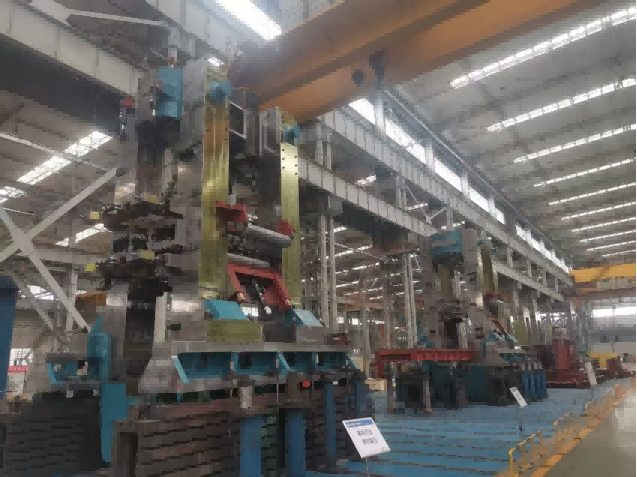
How to Choose the Right Mill Stands?
Selecting mill stands involves more than simply matching a roll diameter or choosing a frame that fits the existing production line. The stand must be able to withstand the expected rolling forces, support the intended roll configuration, and deliver stable performance across the entire product range.
The following factors should be considered when purchasing new stands or upgrading existing equipment.
- Product specifications: Identify the material grade, incoming billet or slab dimensions, final product size, cross-sectional geometry, and required dimensional tolerances. These parameters determine the rolling passes and the mechanical demands placed on each stand.
- Rolling force and structural stiffness: Confirm that the stand can withstand the expected loads without unacceptable deformation. Housing rigidity, bearing capacity, roll support, and the load path through the stand all influence operational stability.
- Roll configuration and adjustment range: Match the stand to the required two-high, three-high, four-high, universal, or specialized arrangement. Verify that the adjustment mechanism can accommodate the required product sizes and pass settings.
- Production speed and line compatibility: For continuous mills, assess the stand's relationship with upstream and downstream equipment, including drive systems, guides, automation, and material transfer. A mechanically suitable stand can still create bottlenecks if it does not fit the operating sequence.
- Maintenance and changeover requirements: Consider roll replacement time, access to bearings and chocks, spare-parts availability, lubrication, and the skills required for routine servicing. Quick-change features can be valuable when a mill frequently changes product sizes.
- Lifecycle cost: Compare initial purchase price with expected maintenance, energy use, downtime, roll consumption, and production losses caused by dimensional variation. The lowest-cost stand is not necessarily the most economical choice over its service life.
When we at Baosteel Roll assess mill stand requirements, we consider the intended rolling application and the relationship between mechanical design, product tolerances, and maintenance needs rather than treating the stand as an isolated component. For a meaningful technical comparison, buyers should provide the mill type, product range, rolling loads, existing equipment layout, and required output before requesting a quotation.
Maintenance Practices That Help Mill Stands Perform Reliably
Even a well-designed mill stand can lose accuracy or availability when clearances, bearings, adjustment mechanisms, and alignment are neglected. Maintenance should combine routine inspection with condition monitoring and checks tied to the mill's operating history.
A practical maintenance program typically includes the following activities:
- Inspect bearings and chocks: Look for abnormal temperature, vibration, lubrication problems, wear, and changes in clearance. Bearing or chock problems can affect roll alignment and product consistency.
- Check roll-gap adjustment: Verify the operation and repeatability of screw-down or hydraulic systems. Unexpected movement or inaccurate positioning may indicate mechanical wear, sensor issues, or control-system faults.
- Monitor housing and structural condition: Inspect relevant connections, fasteners, support surfaces, and structural areas for wear, looseness, or damage according to the manufacturer's procedures.
- Review roll condition and alignment: Check for wear, damage, and incorrect setup. Roll condition and pass alignment should be assessed alongside the stand itself because they can produce similar quality problems.
- Record operating trends: Track dimensional deviations, vibration, temperature, adjustment values, and recurring downtime. Comparing these records over time can help identify developing problems before they cause major interruptions.
Maintenance intervals must follow the equipment manufacturer's recommendations and reflect actual operating conditions. Any inspection or repair involving heavy roll assemblies, stored hydraulic energy, or powered machinery should be conducted under approved isolation and safety procedures.
Common Challenges and Their Impact on Production
Mill stand problems often show up first as product-quality issues rather than obvious structural failures. Thickness variation, inconsistent bar dimensions, poor section geometry, vibration, or repeated adjustment requirements may indicate problems with the stand, rolls, bearings, guides, or control system.
| Observed problem | Possible contributing factors | Recommended investigation |
| Inconsistent strip thickness | Roll-gap variation, stand deflection, thermal effects, or control issues | Check gap settings, stand stiffness, roll condition, and control feedback |
| Variation in bar or section dimensions | Incorrect pass setup, worn rolls, guide misalignment, or mechanical clearance | Inspect roll passes, guides, bearings, and adjustment mechanisms |
| Excessive vibration or noise | Bearing wear, misalignment, drive issues, or looseness | Review vibration trends and inspect relevant mechanical components |
| Frequent unplanned downtime | Difficult roll changes, recurring wear, lubrication issues, or inadequate maintenance | Analyze downtime records and review access, spare parts, and service procedures. |
| Surface defects | Roll damage, contamination, incorrect guides, or process-related causes | Inspect the roll surface and upstream material and process conditions |
These symptoms do not establish a single cause on their own. For example, thickness variation may originate in the stand, but it can also result from changes in incoming material, temperature, tension, or automation. A systematic investigation should examine the complete rolling process before recommending equipment replacement.
Frequently Asked Questions About Mill Stands
- What is the main purpose of a mill stand?
A mill stand supports and positions the rolls that deform metal during rolling. It also helps maintain roll alignment, resist rolling forces, and achieve the required product dimensions.
- What are the different types of mill stands?
Common configurations include two-high, three-high, four-high, universal, housingless, and cantilever stands. They can also be classified by production role as roughing, intermediate, or finishing stands.
- What is the difference between a mill stand and a rolling mill?
A rolling mill is the complete machine or production system used to roll metal. A mill stand is one of its working assemblies, supporting the rolls and related mechanisms that perform a particular rolling pass.
- Why is mill stand rigidity important?
Rigidity helps the stand maintain the intended roll position under high rolling loads. Excessive deflection or mechanical clearance can contribute to dimensional variation and unstable rolling conditions.
- Where are mill stands commonly used?
Mill stands are used in hot and cold strip mills, plate mills, bar and wire rod mills, structural steel mills, and specialized tube or pipe rolling lines. Their configuration depends on the material, product geometry, and process requirements.
- How often should mill stands be maintained?
There is no single maintenance interval suitable for every mill stand. Inspection frequency should follow the manufacturer's recommendations and be adjusted according to operating loads, production hours, equipment condition, and recorded maintenance history.
Conclusion
Mill stands are essential for the performance of rolling mills because they support the working rolls, resist deformation forces, and help to control the dimensions and shape of the rolled metal. The design of mill stands affects the quality of the finished product, production flexibility, maintenance requirements, and equipment availability. Selecting the appropriate stand necessitates a thorough grasp of the product range, rolling process, load conditions, and required tolerances, alongside regular inspections and meticulous maintenance planning.
When making a technical evaluation, buyers should compare stand configurations, structural rigidity, adjustment systems, roll-change arrangements, and compatibility with existing equipment. Selecting stands based on actual operating conditions is more likely to deliver consistent product quality and dependable long-term performance.