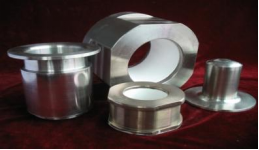
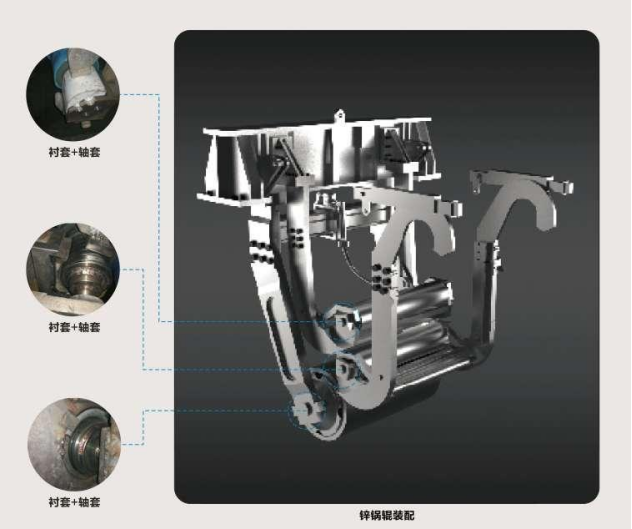
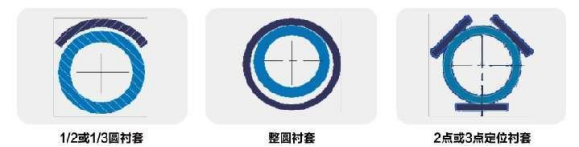
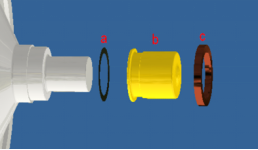
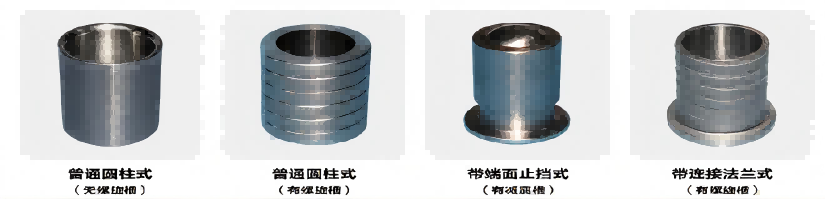
Zinc pot roll shaft bushing is the necessary friction pair for the rotation of zinc pot roll (sink roll, stabilizing roll), which undertakes the core supporting and rotating transmission function of the entire roll system in the harsh zinc pot environment of the cold rolling continuous galvanizing line (CGL). As a key matching component of zinc pot rolls, the shaft bushing cooperates with the roll shaft to ensure flexible, stable and continuous rotary operation of sink rolls and stabilizing rolls during the high-speed production of galvanized steel sheets. Unlike ordinary mechanical bushings, this component works permanently in high-temperature molten zinc liquid, facing extreme working conditions such as high temperature erosion, molten metal corrosion, frequent friction and thermal shock, which puts forward extremely high requirements on its structural stability and material performance.
In the actual production process, the working state of the zinc pot roll shaft bushing directly determines the operating stability of the zinc pot roll system and the overall production efficiency of the unit. It is well known that the service life of the shaft bushing has always been the bottleneck restricting the whole CGL line life cycle. Once the bushing suffers from wear, corrosion, jamming or failure, it will cause abnormal vibration and rotation deviation of the sink roll and stabilizing roll, further leading to defects such as uneven galvanized layer and surface scratches on steel strips, and even forcing the production line to stop for maintenance. Therefore, the quality and durability of the zinc pot roll shaft bushing directly affects the overall service life of the core equipment of the galvanizing line, as well as the production continuity and product quality stability of the entire CGL unit.