

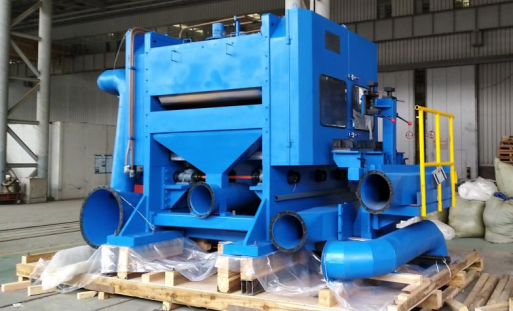
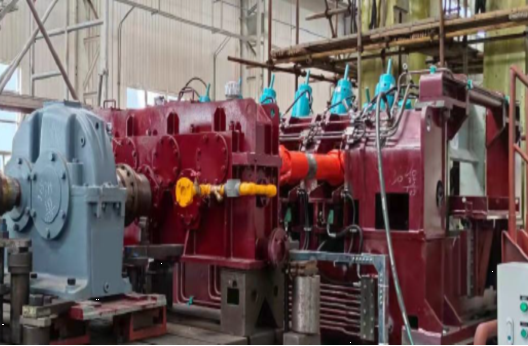
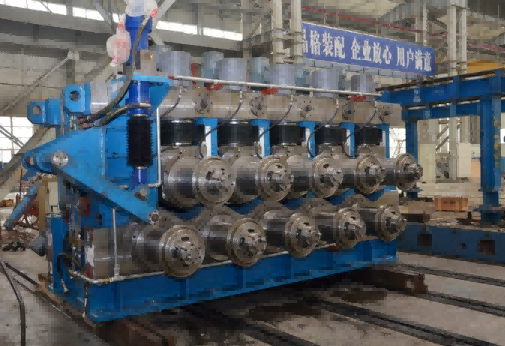


Straightening machine is a kind of mechanical equipment used to straighten metal profiles (such as round steel, square steel, steel pipe, rail, H-shaped steel, steel wire, etc.) To improve their straightness. Its purpose is to eliminate the defects such as bending and warping in the process of rolling, cooling, transportation or heat treatment, and to meet the requirements of subsequent use or finishing
Straightening machine is a vital type of mechanical equipment widely used in the metallurgical, machinery manufacturing and metal processing industries, which is specially designed to straighten various metal profiles. The common processing objects of this equipment include round steel, square steel, steel pipe, rail, H-shaped steel, steel wire and many other conventional metal structural materials. The core working goal of the straightening machine is to effectively improve the overall straightness and flatness of these metal profiles, so as to optimize their surface shape and dimensional accuracy. In the production and processing of metal materials, various irregular deformations are inevitably produced during multiple production links. During the processes of rolling, natural cooling, long-distance transportation or professional heat treatment, metal profiles are prone to produce different degrees of bending and warping defects due to uneven stress, temperature difference and external extrusion force. These shape defects will seriously affect the overall quality and practical performance of metal products. If unprocessed, the unqualified profiles cannot be put into subsequent production and application normally. Therefore, the straightening machine plays an indispensable role in eliminating these inherent shape defects. Through precise mechanical pressure and physical correction, it can balance the internal stress of metal materials and restore the profiles to a standard straight state. Ultimately, this professional processing procedure can fully meet the strict dimensional and shape requirements of subsequent industrial use, mechanical assembly and precision finishing processes. It not only ensures the qualified rate of finished metal products, but also improves the stability and reliability of metal materials in practical engineering applications. In actual industrial production, most metal profiles will generate residual internal stress after hot processing and cold processing, which is the fundamental cause of persistent bending and distortion. The straightening machine adopts multi-point extrusion and gradual correction technology to slowly release the residual stress inside the metal, rather than simply changing the external shape of the materials. This scientific working method can effectively avoid secondary deformation during later cutting, welding and installation of steel materials. Moreover, standardized straightening treatment can greatly reduce the error tolerance pressure of subsequent finishing operations, lower the processing loss and production cost of metal products, and further improve the overall production efficiency. As a key auxiliary equipment in the metal forming industry, it has become an essential process to guarantee the consistency and standardization of batch-produced metal profiles.

Baosteel Roll Science & Technology Co.,Ltd