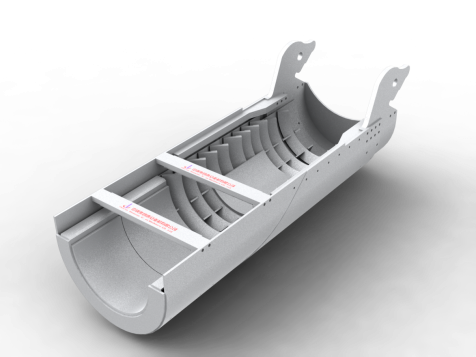
A kok kömür fırını armatürü comprises the structural and sealing components located at the ends of a coke oven chamber. Its primary functions are to support the oven door, ensure reliable closure, accommodate thermal expansion and contraction, and prevent the escape of coke oven gas during the carbonisation cycle. In practice, it connects the door, door frame, sealing elements, and supporting structure to form a system that must remain mechanically stable and gas-tight during repeated high-temperature operation. The U.S. EPA’s technical documentation highlights the importance of coke oven doors, as they reduce heat loss, limit gas leakage and air infiltration, and retain the coal charge inside the chamber.
The term 'coke oven armature' is used somewhat differently by equipment manufacturers and plants. In many industrial applications, it refers broadly to the coke oven door assembly and its associated components, such as the door body, door frame, sealing arrangement, flash plates, latches, and related supporting hardware, rather than to a single part. This broader interpretation is consistent with technical descriptions of coke oven equipment, in which the door frame, door, seals, refractory components and anchoring structures work together as a single functional unit.
What Is a Coke Oven Armature?
A coke oven battery comprises numerous narrow carbonisation chambers arranged side by side. Coal is loaded into one of these chambers and heated indirectly for a set period of time, during which the volatile matter is driven off, leaving behind a carbon-rich material known as coke. As the chambers operate at high temperatures and contain combustible gases, they must be effectively closed at both ends during most of the coking cycle.
This is where the coke oven armature comes in. Rather than functioning as a process machine in its own right, the armature forms part of the mechanical interface between the oven structure and the removable oven door. The door frame provides a fixed sealing surface, while the door body, sealing elements, refractory lining, latches, springs and associated hardware allow the door to be repeatedly opened and closed as each coke batch is removed. Similarly, a regulatory definition of a coke oven door describes the door system as including the door, chuck door, door seal, door jamb and refractory components.
The key point is that a coke oven armature must perform several functions simultaneously. It must tolerate thermal cycling, maintain dimensional stability, provide sufficient mechanical strength, support the sealing system, and remain compatible with the operating mechanism used by the pusher machine or door service equipment. Even if a component performs well mechanically, persistent leakage can still cause serious operational problems.
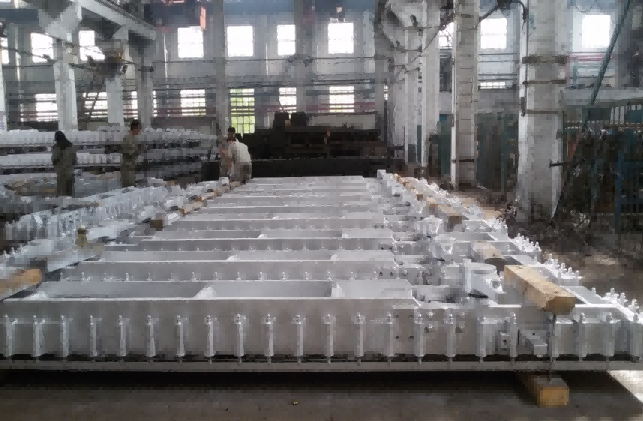
What Is the Main Purpose of a Coke Oven Armature?
The primary purpose of a coke oven armature is to maintain the structural integrity and sealing performance of the oven chamber opening throughout repeated heating, coking, door removal, and door replacement cycles. Its importance therefore goes beyond simply holding the oven door in position.
During normal operation, the armature contributes to five closely related objectives:
- Supporting the oven door: The door must remain accurately positioned against the oven frame despite its considerable weight and repeated mechanical handling.
- Maintaining gas-tight sealing: The sealing edge or sealing elements must maintain sufficient contact with the door frame to reduce uncontrolled escape of coke-oven gas.
- Managing thermal stress: Door frames and related components experience repeated temperature changes and differential thermal expansion.
- Protecting the oven opening: The armature helps maintain the geometry of the chamber end and provides a stable interface for the door and refractory components.
- Enabling repeated operation: The assembly must be capable of being opened, removed, cleaned, serviced, and reinstalled many times without losing its essential alignment.
The EPA specifically identifies minimizing heat loss, preventing gas loss during the coking period, limiting air infiltration later in the cycle, and retaining the coal mass as important functions associated with coke oven doors. Therefore, the armature should be understood as part of the system that enables these operating requirements rather than as an isolated steel casting.
How Does Coke Oven Armature Work With the Door and Door Frame?
The relationship between the coke oven armature, door, and door frame is central to understanding its purpose. The door frame is a stationary component installed around the chamber opening, while the oven door is removable. When the door is installed, its sealing system presses against the frame to create the required closure.
A typical arrangement can include a machined or otherwise controlled sealing surface, spring-loaded components, adjustable sealing elements, latches or hooks, refractory lining, and structural plates. Some designs use flexible diaphragm-type sealing arrangements that can compensate for limited distortion of the door frame. Technical descriptions of coke oven doors show that spring-loaded sealing systems and flexible diaphragms are used specifically to maintain contact between the door and frame under difficult operating conditions.
This relationship also explains why replacing only a damaged door does not necessarily solve a leakage problem. If the door frame has become distorted, worn, contaminated, or thermally deformed, a new door may still fail to establish uniform sealing pressure. Conversely, an accurately maintained frame cannot compensate indefinitely for damaged sealing elements, warped door components, or degraded refractory lining.
| Coke oven armature component | Primary role | Typical operating concern |
| Door frame/door jamb | Provides the stationary sealing interface | Distortion, wear, flatness and alignment |
| Oven door body | Closes the chamber opening | Warping, mechanical damage and corrosion |
| Sealing element | Limits gas leakage | Wear, deformation and loss of contact pressure |
| Latch/hook/fastening system | Secures the door against the frame | Mechanical wear and incorrect adjustment |
| Refractory lining/plug | Protects the door structure from furnace heat | Cracking, spalling and local overheating |
| Supporting or anchoring components | Transfer loads into the oven structure | Thermal stress, looseness and deformation |
Why Is Sealing Performance So Important?
Sealing is one of the most important performance requirements for a coke oven armature, as the carbonisation chamber contains hot gases generated when coal is converted into coke. Uncontrolled leakage can result in environmental, safety, energy efficiency, and maintenance issues.
The objective is not simply to ensure that the door is 'tight' in a static mechanical sense. The sealing system must remain effective even when the door, frame, refractory lining and surrounding oven structure are subject to temperature gradients and dimensional changes. For example, a coke oven door frame manufacturer notes that prolonged exposure to differential temperatures can impose substantial thermal stress on the frame, and that distortion can affect sealing performance and lead to gas leakage.
This is why coke oven armature design often incorporates flexible or spring-assisted sealing arrangements rather than an absolutely rigid interface. Patents concerning coke oven doors describe sealing edges that cooperate with the door frame and use elastic or adjustable elements to maintain contact. The engineering principle is straightforward: controlled flexibility can be advantageous when the surrounding steel and refractory structures are repeatedly exposed to large thermal cycles.
From an environmental perspective, this issue is equally significant. Coke oven batteries have historically been subject to stringent controls because door leaks can release process gases and emissions containing particulates. Recent technical work on leak-proof coke oven doors continues to focus on maintaining sealing performance over long operating periods, demonstrating that door sealing remains an important maintenance and environmental control issue in modern coke production.
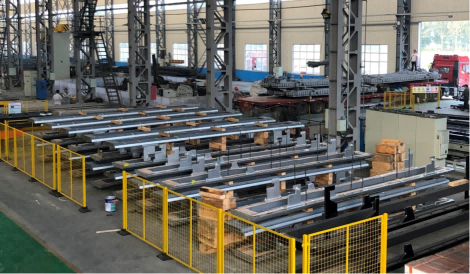
What Materials and Design Features Are Important?
There is no single universal material specification for every coke oven armature because the final design depends on oven dimensions, door construction, thermal conditions, mechanical loads, sealing technology, and the original battery design. Large structural components may use cast iron, ductile iron, cast steel, fabricated steel, or specially selected alloys for particular sealing or high-temperature applications.
For example, one coke oven door-frame manufacturer specifies FCD500 for a large door-frame design and describes the component as being exposed to thermal stress and bending forces caused by abnormal furnace-body expansion. Other coke oven door designs use special alloy steel for sealing elements because the sealing components need to withstand elevated temperatures while retaining dimensional and spring characteristics.
Design should therefore be considered as a combination of material selection, geometry, machining accuracy, thermal compensation, sealing technology, and maintenance accessibility. The correct specification is normally established from the original oven drawings, chamber dimensions, door configuration, operating pressure, refractory arrangement, and replacement requirements rather than from a generic “coke oven armature” size.
| Design factor | Why it matters | What buyers should verify |
| Chamber height and width | Determines door and frame geometry | Original oven drawings and chamber dimensions |
| Door/frame interface | Directly affects sealing | Sealing method and contact geometry |
| Thermal expansion | Can change alignment during operation | Material properties and thermal compensation |
| Refractory configuration | Influences heat transfer and door temperature | Lining type, thickness, and replacement method |
| Mechanical handling | Determines loads during removal and installation | Door machine interface and lifting points |
| Machining tolerance | Influences sealing consistency | Critical dimensions and inspection records |
| Operating history | Reveals recurring deformation or wear | Maintenance records and failure locations |
For replacement projects, we normally treat the existing door and frame drawings, sample dimensions, operating conditions, and failure history as equally important as the nominal chamber size. At Baosteel Roll, for example, we approach coke oven armature requirements from the actual equipment interface and operating conditions rather than treating the product as a generic casting; this is particularly important when a replacement component must match an existing coke oven battery.
How Does Thermal Expansion Affect Coke Oven Armature?
One of the main reasons that coke oven armature design cannot be reduced to simple structural strength calculations is thermal expansion. Coke ovens operate with substantial temperature differences between the hot chamber, the refractory structure, the door, the door frame, and the external environment. During charging and pushing, the door is opened and exposed to a significantly different thermal environment from that experienced during the closed coking process.
Repeated thermal cycling can gradually produce distortion, residual stress, wear, and changes in sealing geometry. Research and industrial documentation on coke oven door frames specifically identifies differential temperature as a source of thermal stress and potential distortion. The refractory lining introduces another variable, as damage or uneven heat transfer can cause the door structure to overheat locally.
For this reason, a well-designed coke oven armature requires more than just high-temperature resistance. It must also be able to accommodate predictable thermal movement without losing the mechanical relationship between the door, frame, sealing edge, and supporting structure. The practical objective is to achieve stable performance over repeated cycles rather than maximum rigidity under a single operating condition.
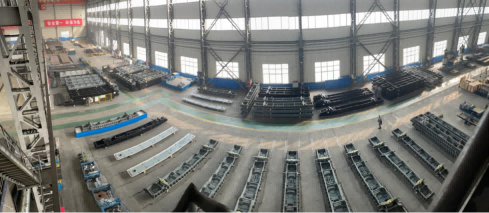
What Happens When Coke Oven Armature Is Poorly Maintained?
Poor armature condition typically manifests as operational issues before resulting in complete structural failure. Operators may notice increasing door leakage, difficulty opening or closing the door, abnormal contact marks, damaged refractory material, recurring seal problems, or visible deformation around the door frame. However, these symptoms should not automatically be attributed to the sealing strip alone.
A distorted door frame, damaged refractory lining, worn latch mechanism, loose fastening hardware or incorrect door alignment can all affect the final sealing condition. A technical description of coke oven door maintenance specifically highlights the need to inspect the frame, springs, bolts, edge flatness, adjustability and door lining, as refractory damage can cause localised overheating and subsequent door deformation.
Therefore, a practical maintenance programme needs to consider the entire door-armature interface. This involves cleaning the sealing surface, checking contact patterns, measuring critical dimensions, inspecting the condition of the refractory lining, verifying latch operation, and monitoring locations where leakage recurs. This helps to distinguish normal wear and tear from a developing structural problem. For high-throughput batteries, preventive maintenance is particularly important because small geometric problems can be repeated across many operating cycles.
How Should Coke Oven Armature Be Selected or Replaced?
Selecting a replacement coke oven armature should begin with the existing oven configuration rather than a generic catalog description. Important information includes chamber dimensions, pusher-side and coke-side configuration, door type, frame geometry, sealing method, refractory arrangement, fastening system, operating temperature, and the interface with the coke oven machine.
For a new battery, the armature is normally developed as part of the overall coke oven engineering package. For an existing battery, the engineering task is often more demanding because the replacement has to reproduce or improve a proven interface while accounting for accumulated deformation and wear.
The following workflow is useful for procurement and engineering teams:
- Identify the original oven design. Confirm chamber dimensions, battery configuration, manufacturer, door type, and operating history.
- Document the existing assembly. Record door, frame, sealing system, latches, refractory lining, flash plates, and attachment points.
- Measure critical interfaces. Do not rely only on nominal dimensions; inspect actual frame geometry and worn areas.
- Identify the failure mechanism. Determine whether leakage or deformation originates from the frame, door, seal, refractory, fastening system, or their interaction.
- Confirm material and manufacturing requirements. Casting quality, heat treatment, machining accuracy, surface condition, and dimensional inspection should correspond to the duty of the component.
- Verify installation compatibility. A replacement armature is only successful when it can be correctly installed, aligned, sealed, and operated by the existing equipment.
This approach is more reliable than purchasing a component solely by chamber height because two coke ovens with similar nominal dimensions can use different door structures, sealing arrangements, and attachment details.
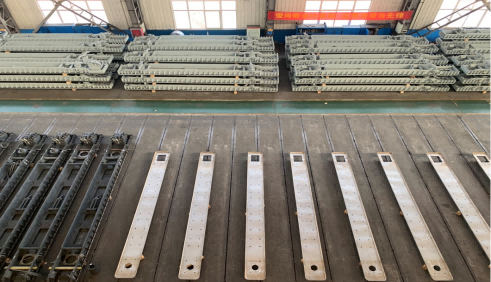
Coke Oven Armature FAQs
- What is a coke oven armature used for?
A coke oven armature supports the oven door and associated hardware while helping maintain a stable, gas-tight closure of the carbonization chamber. It also accommodates the mechanical and thermal conditions created by repeated coking cycles.
- What is included in a coke oven armature?
Depending on the manufacturer and project terminology, it may include the coke oven door, door frame, sealing components, latches, refractory-related components, flash plates, and supporting hardware. The exact scope should always be confirmed against the oven drawings and equipment specification.
- What is the difference between a coke oven armature and a coke oven door?
The coke oven door is the removable closure of the chamber, whereas “armature” is often used more broadly for the door-related structural and sealing assembly. In industrial procurement, the two terms can overlap, so the supplied scope should be defined component by component.
- Why does a coke oven door leak?
Door leakage can result from worn sealing elements, frame distortion, improper alignment, damaged refractory, poor adjustment, or contamination of the sealing surface. Replacing the seal alone may not solve the problem if the underlying door-frame geometry has changed.
- What materials are used for coke oven armature?
Materials vary with the component and oven design and can include cast iron, ductile iron, cast steel, fabricated steel, and specialized alloy steels. Material selection should consider mechanical loads, thermal cycling, corrosion, sealing requirements, and the original equipment design.
- How often should coke oven armature be replaced?
There is no universal replacement interval because service life depends on oven design, operating temperature, cycling frequency, maintenance quality, and the degree of deformation or wear. Condition-based inspection is generally more meaningful than replacing every armature after a fixed number of years.
Conclusion
The purpose of a coke oven armature is to preserve the mechanical and sealing integrity of the oven chamber opening under severe and repetitive operating conditions. It supports the door, establishes the interface between the door and the frame, accommodates thermal movement, protects critical refractory and structural components, and helps control heat and coke-oven gas emissions.
The importance of the armature becomes clearer when the door system is viewed as an integrated engineering assembly rather than a collection of individual castings and seals. A high-quality armature must be dimensionally stable and mechanically reliable, and capable of maintaining an effective seal after thousands of thermal and mechanical cycles. Therefore, for replacement or new-project applications, it is more important to match the actual oven configuration, interface dimensions, material requirements, and operating conditions than to select a nominal size alone.