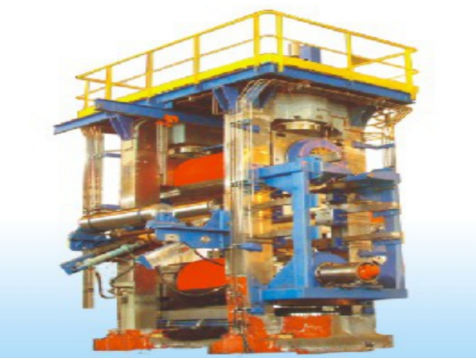
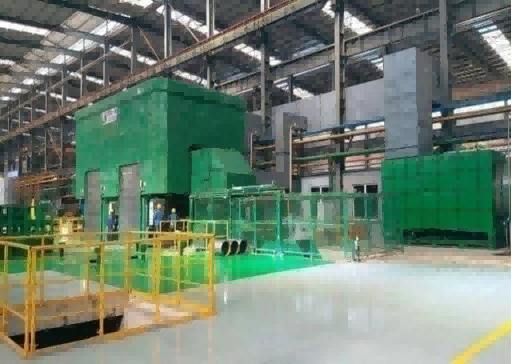
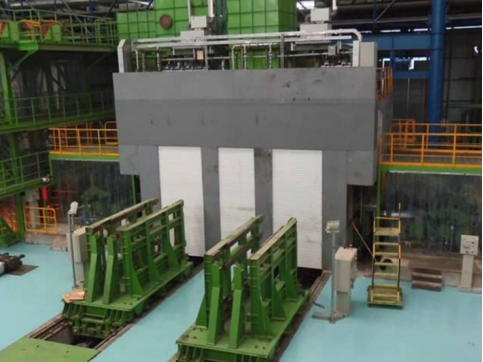
Leveler, also known as plate leveler or sheet leveler, is a vital piece of industrial mechanical equipment that adopts the professional principle of material elastic-plastic deformation to perform precision leveling processing on various metal workpieces. It is widely applicable to different forms of metal raw materials, including metal plates, metal sheets, long strips, and coiled materials that are commonly used in metal processing, machinery manufacturing, and metal forming industries.
The working logic of the leveler is based on the physical characteristics of metal materials. When metal materials are produced, cut, rolled or processed, they are prone to uneven force distribution and internal structural changes, which will generate unstable residual stress inside the materials. This hidden internal stress will directly lead to a variety of surface and shape defects of metal products, seriously affecting their processing accuracy and application performance.
The core function of the leveler is to effectively eliminate the residual stress trapped inside metal plates and completely correct various geometric uneven defects. The typical defects it can fix include plate warping, wavy edge deformation, overall bending, and sickle bending that frequently occur in strip and plate materials. Through continuous and uniform rolling and deformation correction, the equipment forces the metal material to undergo controllable elastic and plastic deformation, making the internal material structure tend to be uniform and stable.
Ultimately, the leveling process enables processed metal parts and raw materials to achieve extremely high flatness and dimensional stability. It lays a solid foundation for subsequent precision processing such as cutting, welding, stamping and assembly, ensuring the quality consistency and service reliability of finished metal products in industrial production.